

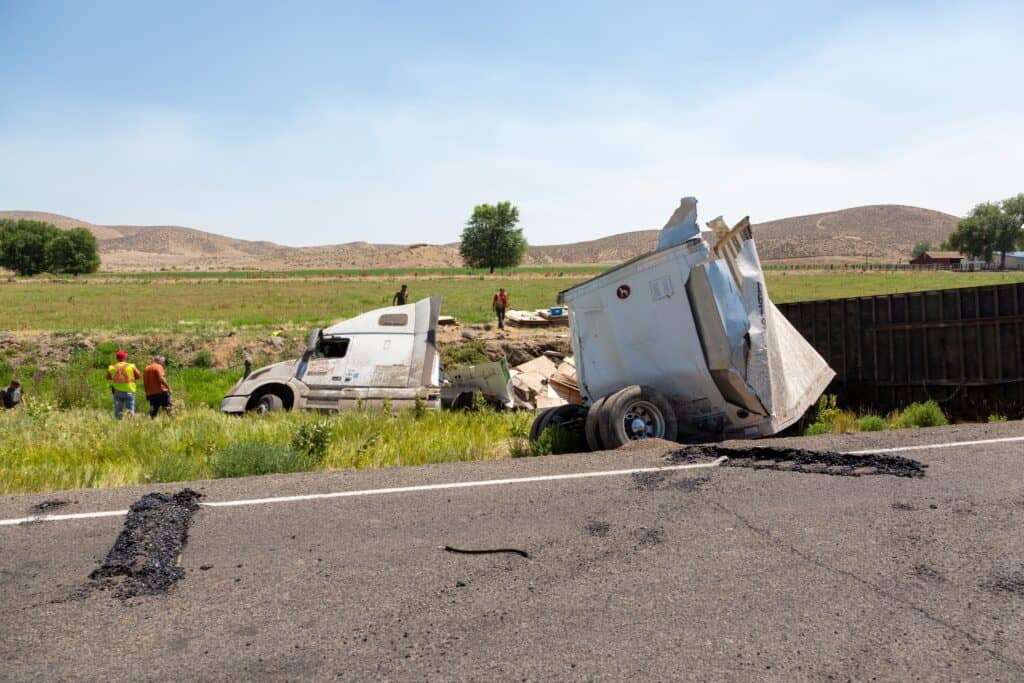
 Every motor carrier knows an accident is possible. Far fewer have a clear plan for the hours immediately after one, and that gap tends to be expensive.
What happens in the first day shapes almost everything that follows, including how quickly the claim resolves, what it ultimately costs, and how defensible your position is if it becomes litigation. Plaintiff attorneys often begin building their case within hours. Carriers who wait to get organized start at a disadvantage.
Your driver needs to know exactly what to do
In the moments after a collision, a driver is shaken and working from instinct. Whatever they say at the scene can follow the claim for years.
Drivers should know to check for injuries, call emergency services, and cooperate fully with law enforcement, while avoiding any discussion of fault with anyone at the scene. Apologies offered out of ordinary human decency are routinely presented later as admissions. Every driver should have written instructions in the cab and should have walked through them before they ever need them.
Document the scene while it exists
Physical evidence disappears fast. Vehicles get moved, debris gets cleared, skid marks fade, weather changes. Photographs taken at the scene are often the only record of what conditions actually looked like.
If it’s safe to do so, drivers should photograph everything, including all vehicles from multiple angles, the position of vehicles before they’re moved, road and weather conditions, signage, and any visible damage or lack of it. Names and contact details for witnesses are just as valuable, because independent witnesses become very hard to locate weeks later.
Report it immediately, even if it seems minor
Carriers sometimes delay reporting a small incident, hoping it resolves quietly. Minor incidents have a habit of growing, particularly when injuries surface days later, and a delayed report weakens your position while limiting what your insurer can do to help.
Early reporting lets adjusters and defense resources engage while evidence is fresh. It also removes any argument that the carrier was slow to take the event seriously, which is exactly the kind of detail opposing counsel likes to highlight.
Preserve the electronic record
Modern trucks generate a substantial amount of data, including ELD records, engine control module data, telematics, and dash camera footage. Much of it overwrites itself on a cycle, sometimes within days.
Preserving that data immediately is one of the highest-value actions a carrier can take. It frequently supports the driver’s account, and losing it through ordinary system overwrites can look far worse than it is when the question comes up in litigation.
Assemble the file before anyone asks
Once a serious claim develops, expect requests for the driver’s qualification file, hours-of-service records, maintenance and inspection history, training documentation, and hiring records.
Carriers with organized records hand these over promptly and demonstrate a well-run operation. Carriers scrambling to reconstruct files under deadline pressure often surface gaps that become the story, regardless of what caused the accident. The work that makes this easy happens long before any incident occurs.
Handle post-accident testing correctly
Federal regulations set specific requirements and timeframes for post-accident drug and alcohol testing. Missing those windows creates a compliance problem on top of the accident itself.
Everyone involved in dispatch and safety should know the triggers and the deadlines cold, because the clock starts at the scene and nobody has time to research it in the moment.
Have the plan before you need it
The carriers who come through serious accidents in the best shape are rarely the luckiest ones.
They’re the ones who wrote the plan in advance, trained their drivers on it, and kept their documentation current as a matter of routine.
An accident response plan costs almost nothing to build and takes an afternoon to review with your team. Compared to what a poorly handled claim can cost a trucking operation, it may be the highest-return hour a safety manager ever spends.
To review your coverage or discuss accident response planning for your operation, contact our team today.